



By Us, For Us: The Rise of Queer Cycling Communities
Cycling has long been coded as a white, cisgender and male-dominated sport. That shows up in its club culture, its professional ranks, and those pictured riding when mainstream media talks about cycling's joy and performance. That created image has shaped the idea of who feels invited onto a group ride, or called to get a bike or start cycling and who has to fight for their place or to earn belonging in the group. You can ride alone for hours and never feel as exposed as you do walking into your first group ride.
While no sport is exclusive on its own, sport is a microcosm of society, and the same violence that exists in the world shows up inside it too. That includes racism, sexism and queerphobia. Across geographies, people who identify as queer or are part of the LGBTQIA+ community face discrimination and remain at risk of physical and psychological harm, just for being visibly themselves.
Identity is not just who we are. It doesn’t stop at our name, age, the city of our birth or the color of our bike. Identity is also the intersection of every part of us that the world insists on separating, queerness and race, gender and class, disability and faith, even when we experience them all at once, in the same body, on the same ride.
This concept of Intersectionality coined by US-american legal scholar and academic Kimberlé Crenshaw argues that multiple forms of discrimination can happen simultaneously to the same person. We can see that today there are cycling communities dedicated to Lesbian Cyclists, Black Gay Cyclists, Queer Refugees, among many others, where the desire was to create a space for people with similar experiences. Following that idea, various marginalized groups have built spaces where they can foster connection and enjoy togetherness without that same exposure. Spaces created by them and for them. Spaces where they can show up just as they are.
As we understand more about who we are, the experiences and ideas that shape us take on greater weight in how we choose to spend our time and who, and what, starts to feel like home. No space is inherently safe which is exactly why they're called safer spaces, but the goal of these communities is to keep advocating: for safety, for inclusion, for fair treatment, for ongoing support, and ultimately, for liberation.
Chicane Bike Club – Berlin (Germany)
Clubs such as Chicane Bike Club in Berlin put inclusion at the heart of what they do. The club’s aim is to foster a community of cyclists who haven’t found their place in the mainstream discourse of cycling. Through regular gravel and road cycling social rides and workshops, they’re creating an interconnected group of FLINTA (Femmes, Lesbians, Intersex, Non Binary, Trans and Agender people) and Queer cyclists who show up for one another and motivate each other to venture towards challenges such as ultras and bikepacking journeys. Like their motto pedals as portals, they’re using cycling and community events to create space for all Queers & FLINTAs to feel welcome in the world of cycling.
Queer Wheels Cycling Club – Amsterdam (The Netherlands)
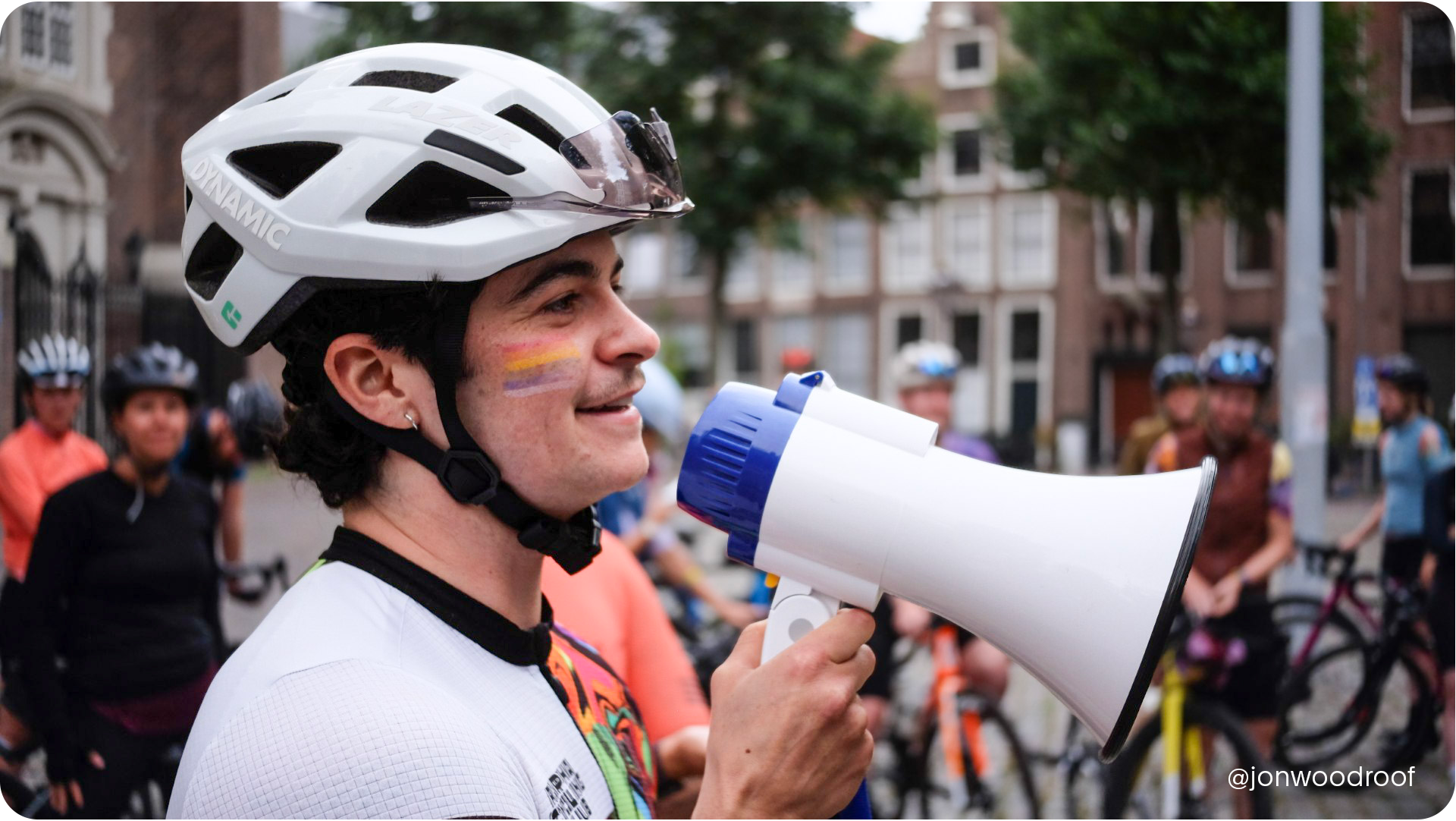
And similar clubs are rising across the world, like Queer Wheels Cycling Club in Amsterdam which is led by Sebastien, a trans advocate for inclusion in cycling. In their own words, “it’s nice to know where you belong and that it has no specific place. It’s wherever you go, with whoever you meet”. Many advocates for cycling promote the benefits of inclusion for our physical and mental health, while one of the most important may be social health. Such spaces offer the chance to meet people with an expansive solidarity mindset.
And this is why representation matters. While the impact of visibility alone can be hard to measure, the constant exposure to seeing people like us do incredible things such as ultra gravel cycling, installing a baby seat on a mountain bike, leading a club, simply showing up, creates the belief that it's possible for us and that we have the right to belong too. Representation doesn't just foster self-identification. It builds community.
Queer Shift – Colorado (USA)
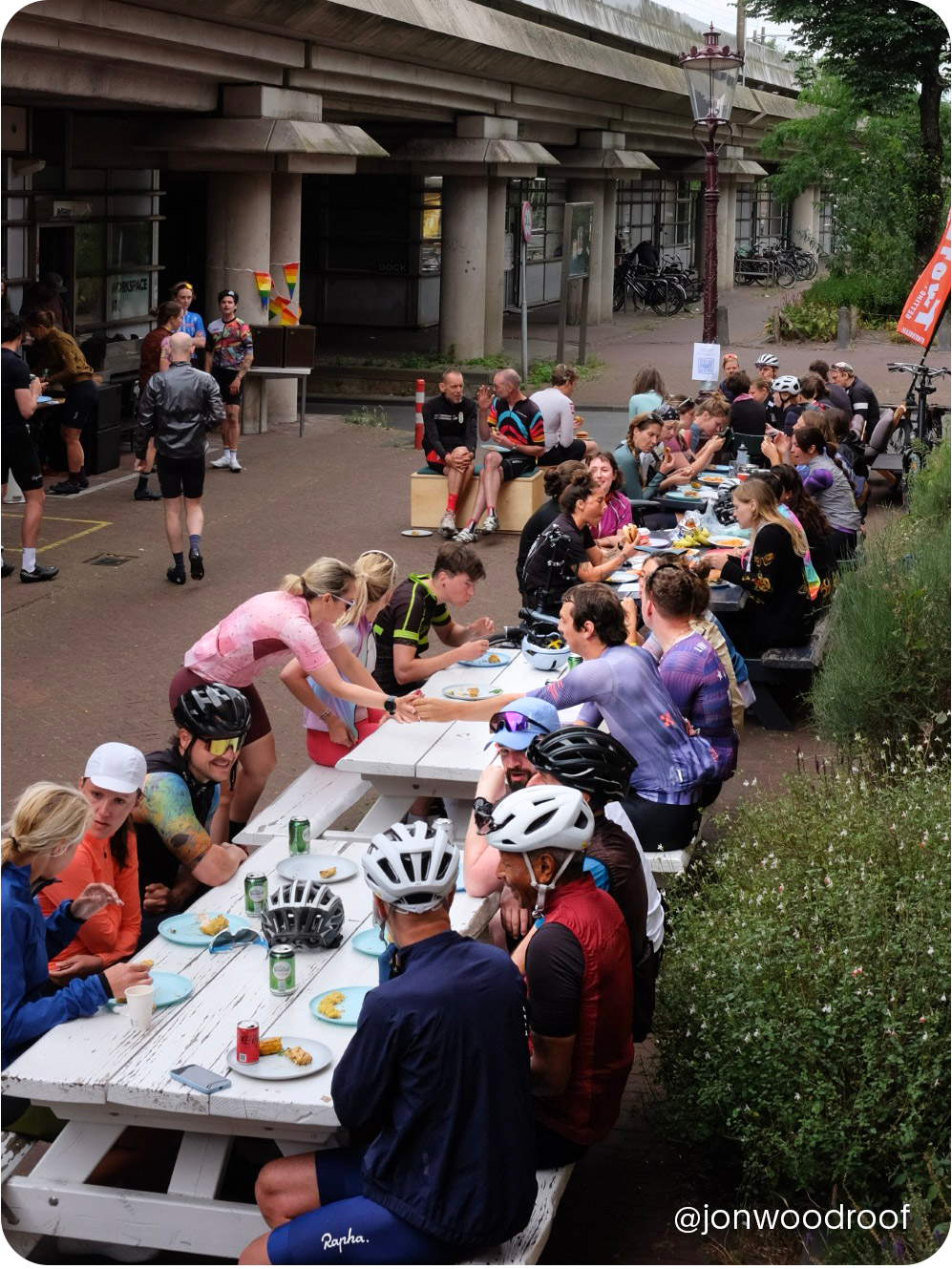
Terms like no drop and ride with pride show up across queer cycling spaces worldwide, signaling to both locals and visiting riders that they're welcome. The cycling group Queer Shift, from Colorado, for example, organizes no-drop social rides alongside fundraising events like Bike for LGBTQ+ Youth, which supports The Trevor Project, a suicide prevention organization for LGBTQ+ youth. It's a good example of how a shared hobby can turn into something with real reach beyond the ride itself.
There are no unwelcoming spaces when you can go somewhere that makes its stance obvious, somewhere you don't have to second-guess whether you belong. In the end, what matters most isn't the ride itself, but the relationship between the people doing it. And that relationship means nothing if it's built on exclusion.
These clubs are proof that the work is already happening, not as an addition to cycling, but as cycling becoming what it was always capable of being. A better image of cycling is possible, one that makes space for everyone to find their place in it. Maybe that's the real difference between riding alone and riding together: alone, the freedom is yours alone to hold. Together, it becomes something built by us, and unmistakably, for us.
Written by Oumou Aidara
A Berlin-based creative and endurance athlete, and founder of Sport Is For Everyone, a transdisciplinary platform and grassroots initiative exploring the cultural, social and structural conditions that shape who sport is for, working toward a more inclusive space.


